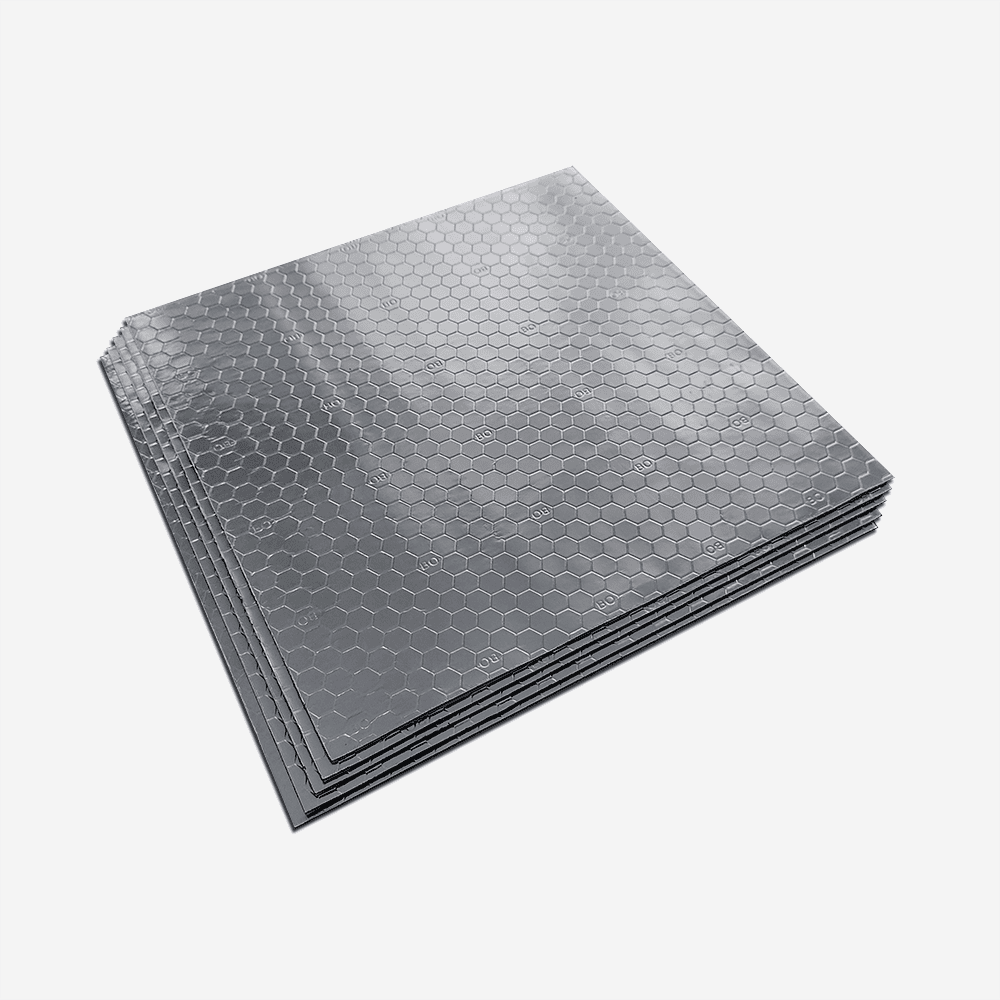
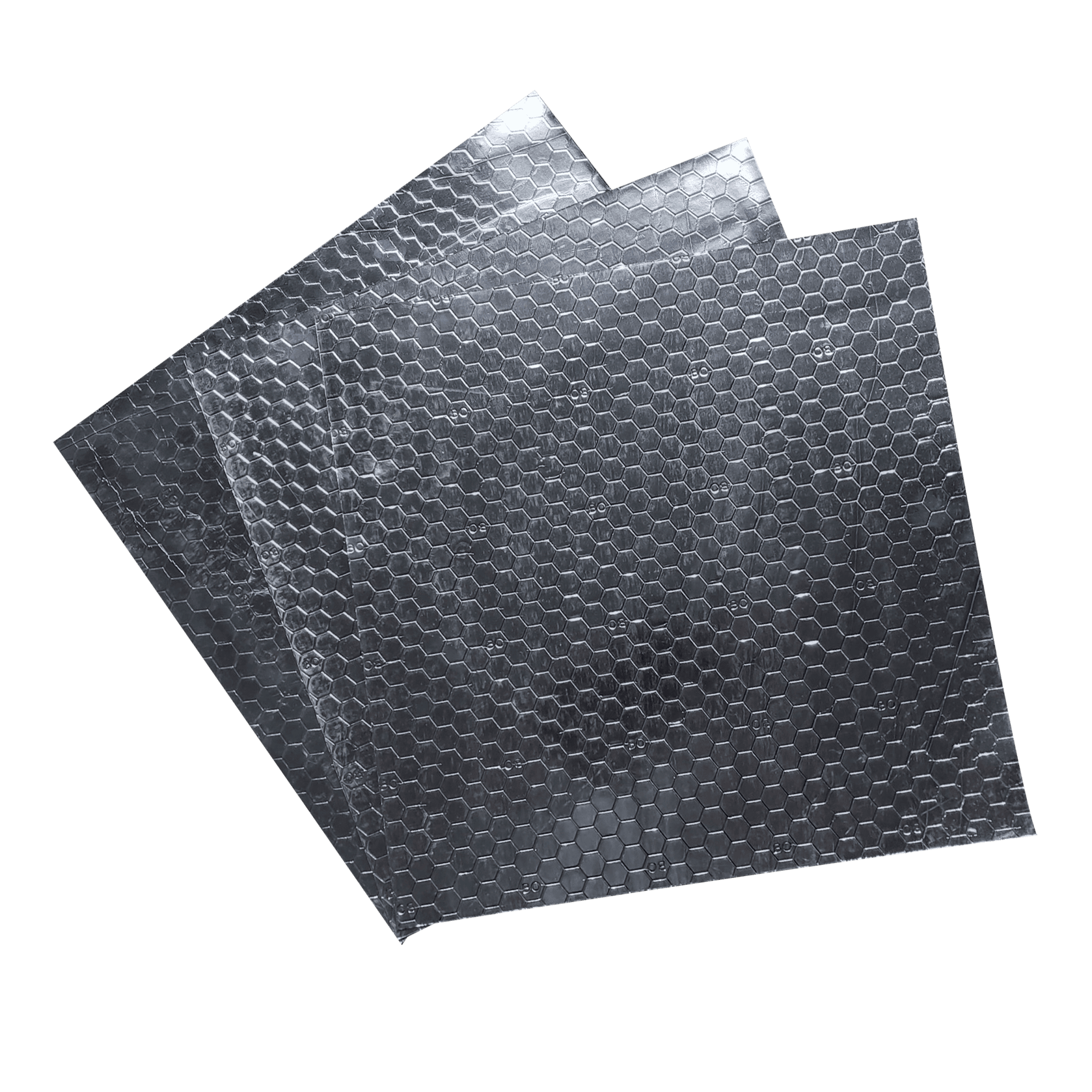
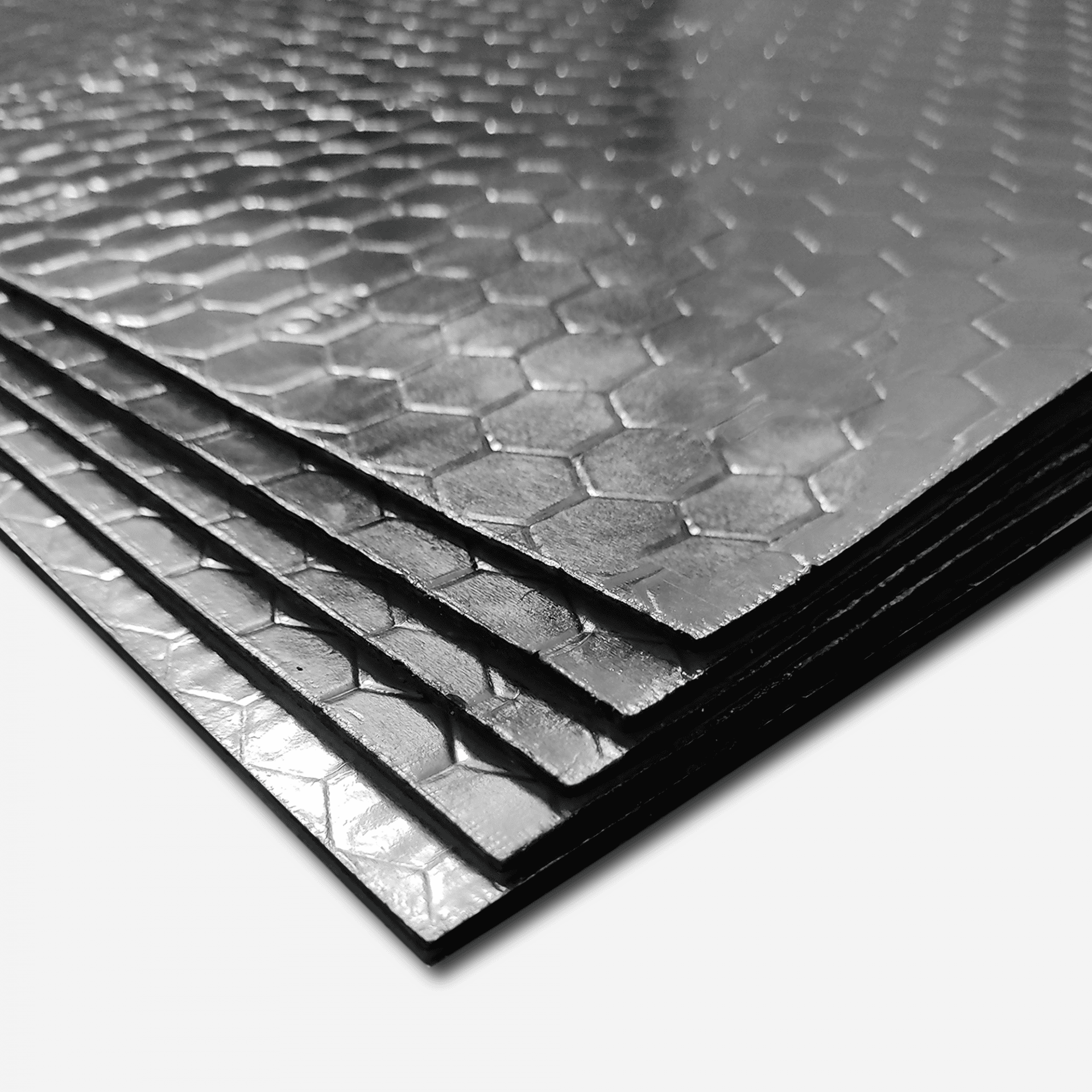
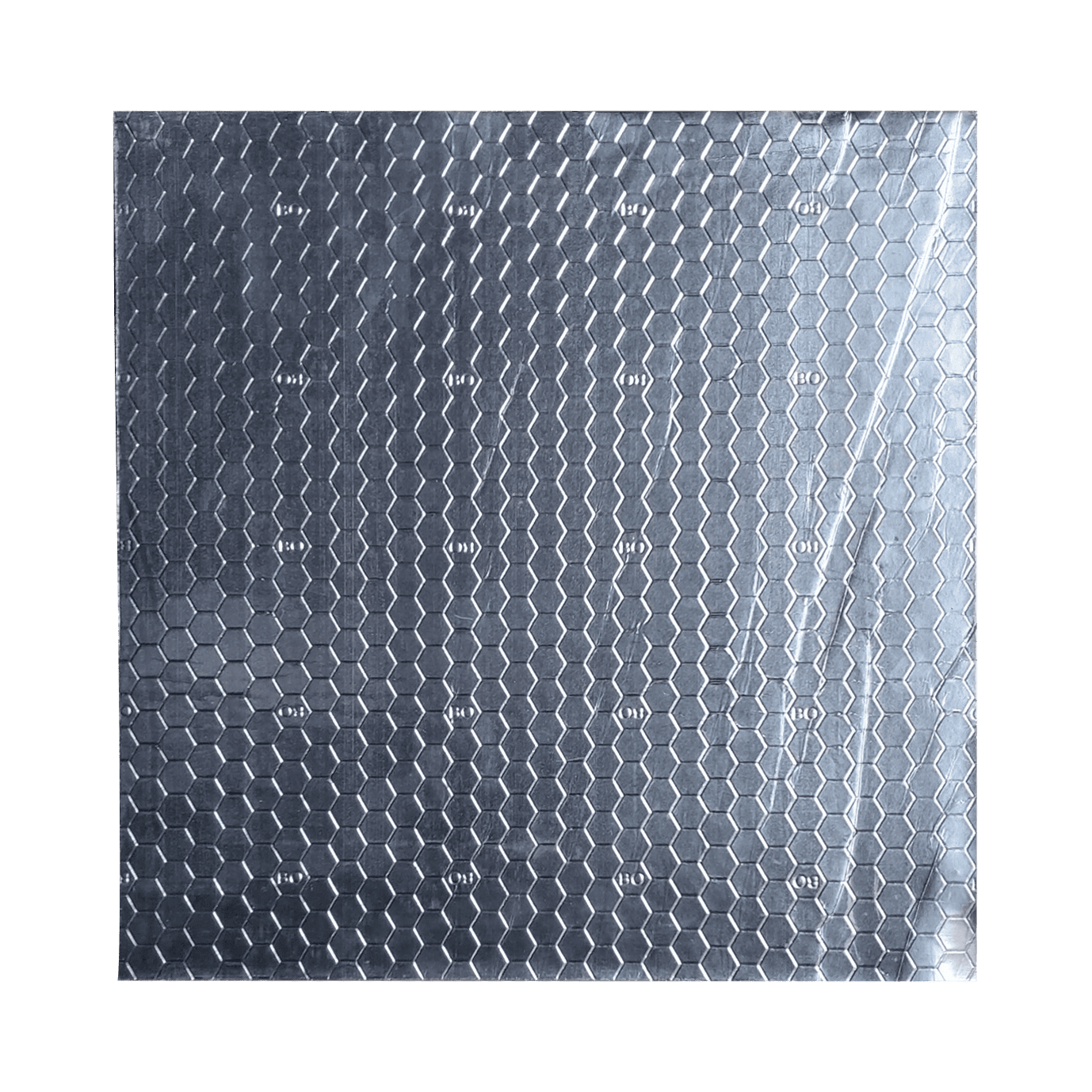
DSA Vibration Damping Sheet are manufactured from bitumen with added mineral fillers and synthetic rubber to form a highly viscoelastic material.
They are designed to minimise acoustic and vibration radiation of sheet metal. They can improve sound insulation performance of the substrate by adding mass.
DSA Vibration Damping Sheet are available in five standard grades, two of which have an aluminium foil facing on one side for improved fire performance: all have a full selfadhesive backing.
They are available in sheets or can be die-cut to size and shape.
Product Code:
Product Code:
To obtain optimum bond strength from the self-adhesive backing supplied on DSA follow these instructions:
- Allow to stabilise at room temperature prior to use.
- Apply in the horizontal or vertical plane. Where there is a requirement for the damping sheet to be applied to the underside of a substrate, the substrate should be turned upside down if at all possible. The
damping sheet can then be applied to the underside from the horizontal or vertical plane and left until the adhesive has fully cured before turning the substrate back to its correct position. If re-orientation of the
substrate is not possible, the damping sheet can be applied from the underside providing it is supported against the substrate until the adhesive cures. It is recommended that some form of permanent additional
mechanical fixing also be used to retain DSA to the underside of substrates. This prevents the downwards pressure and weight of the damping sheet weakening the adhesive bond.
- Clean and dry the substrate with an appropriate cleaner i.e. methylated spirit or similar so that it is free from oil, grease, rust, dust or other particles. For applications onto timber substrates, the surfaces should
be prepared using a primary coat of A303 Adhesive, available from Onzca Industrial.
- If possible, gently preheat the damping sheet to 30°C and apply when the ambient temperature is between 18°C and 25°C. Do not subject to direct flame.
- Peel off the protective backing, position material onto substrate and apply a constant forward and downward pressure to the surface of the damping sheet to ensure it is securely fixed onto the substrate. A hard timber or steel roller is recommended for this purpose.
- Particular care must be taken to avoid forming air pockets between the substrate and selfadhesive backing, as this will weaken the bond and reduce the vibration damping performance.
Tel:
Email: