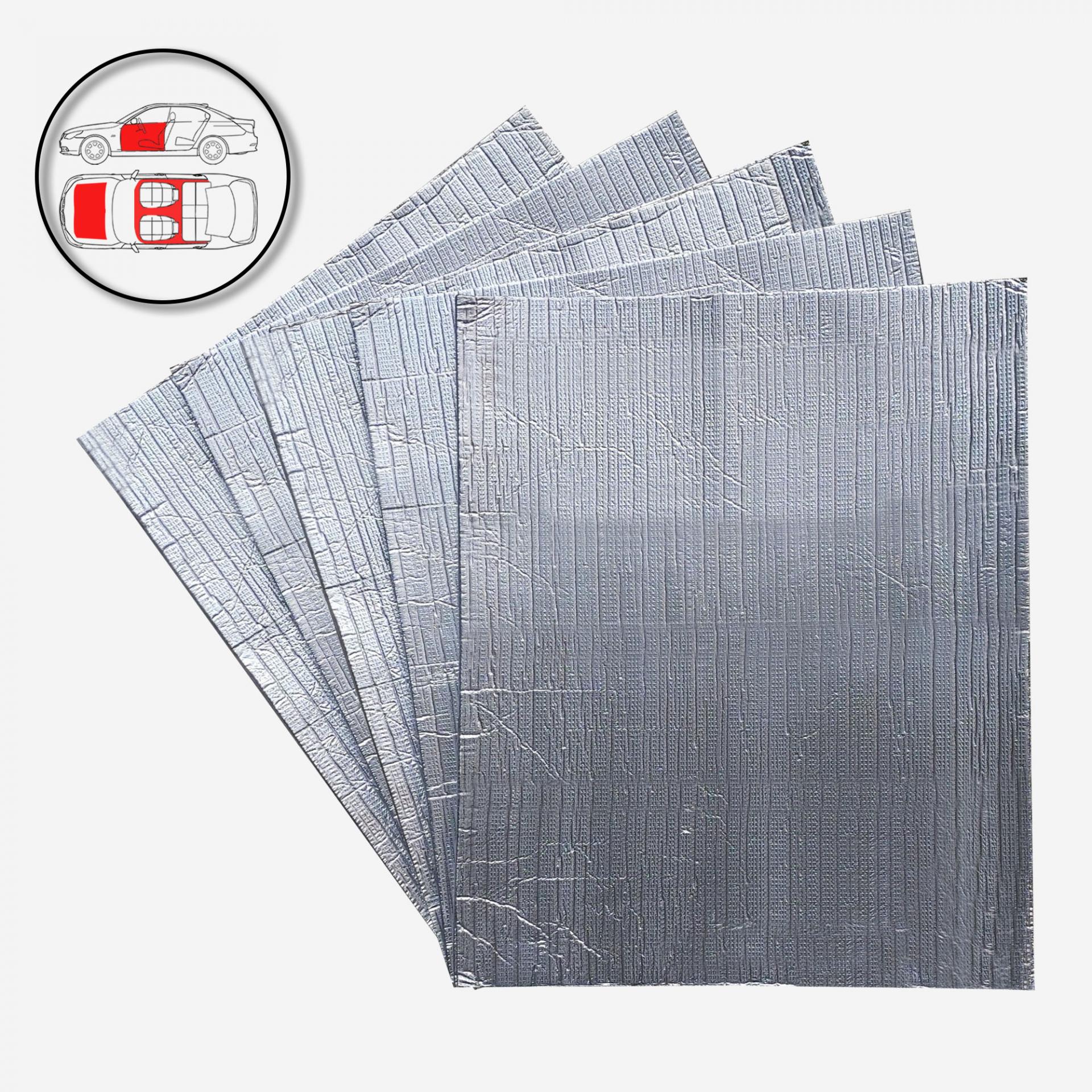
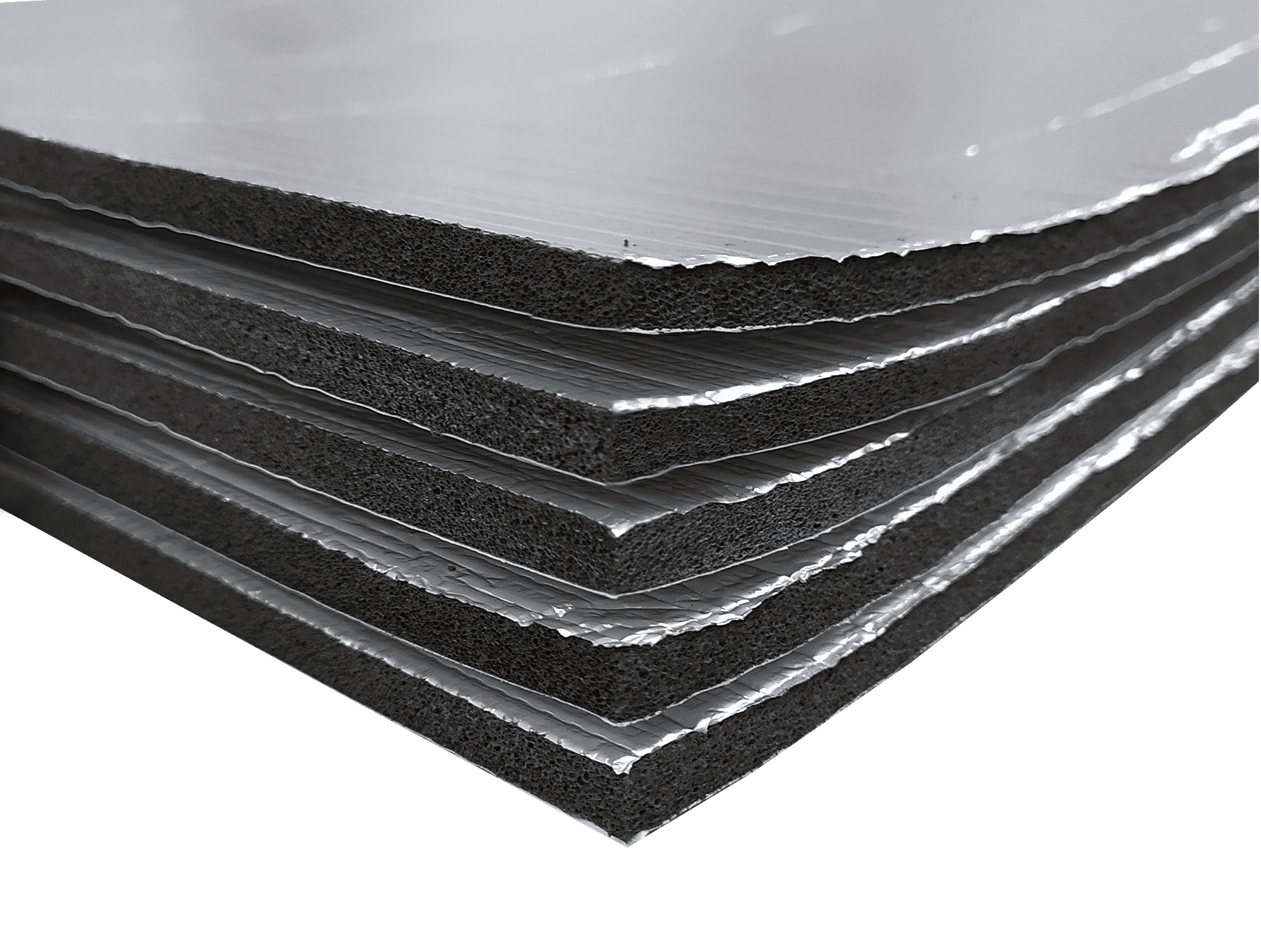
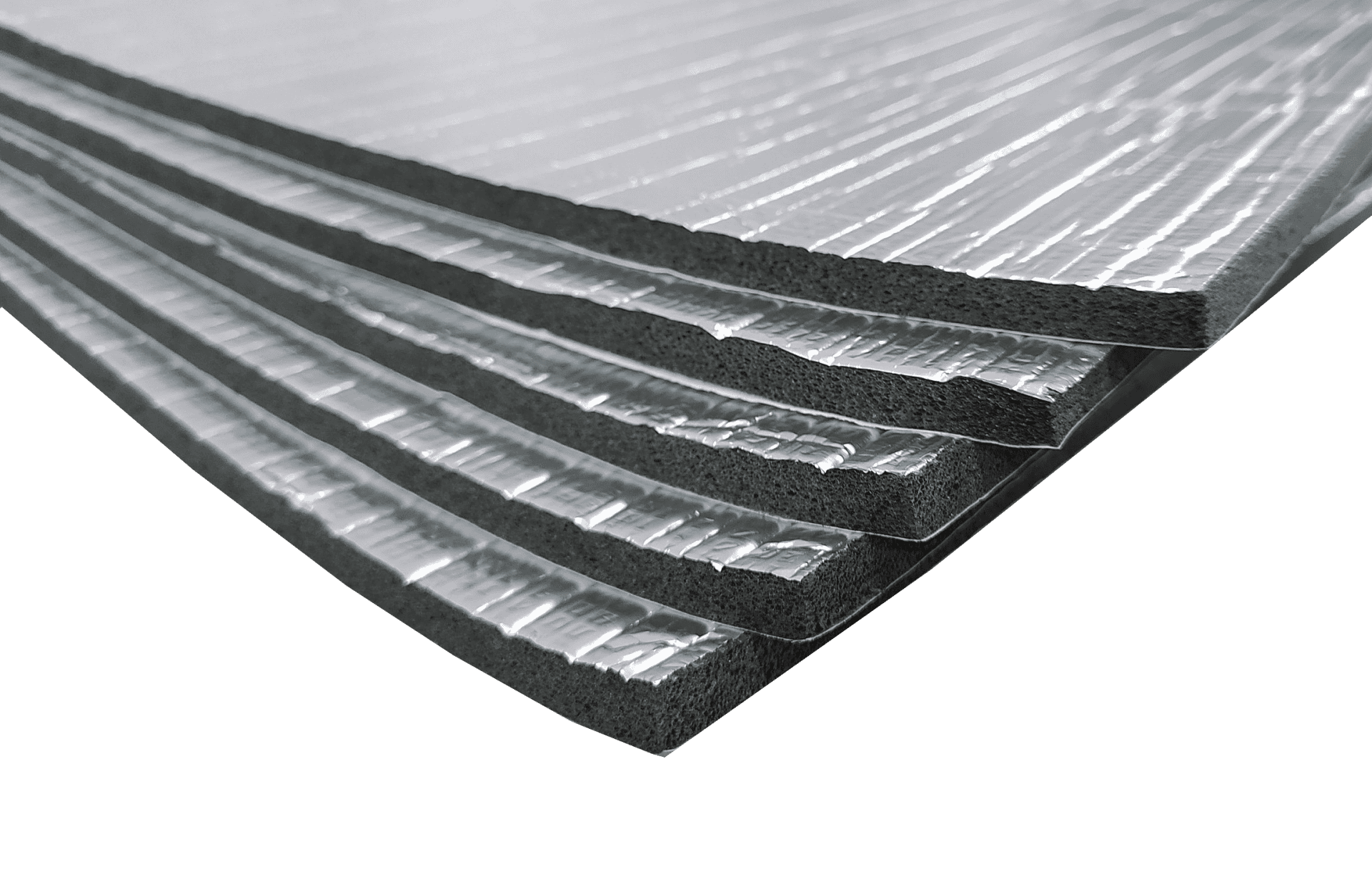
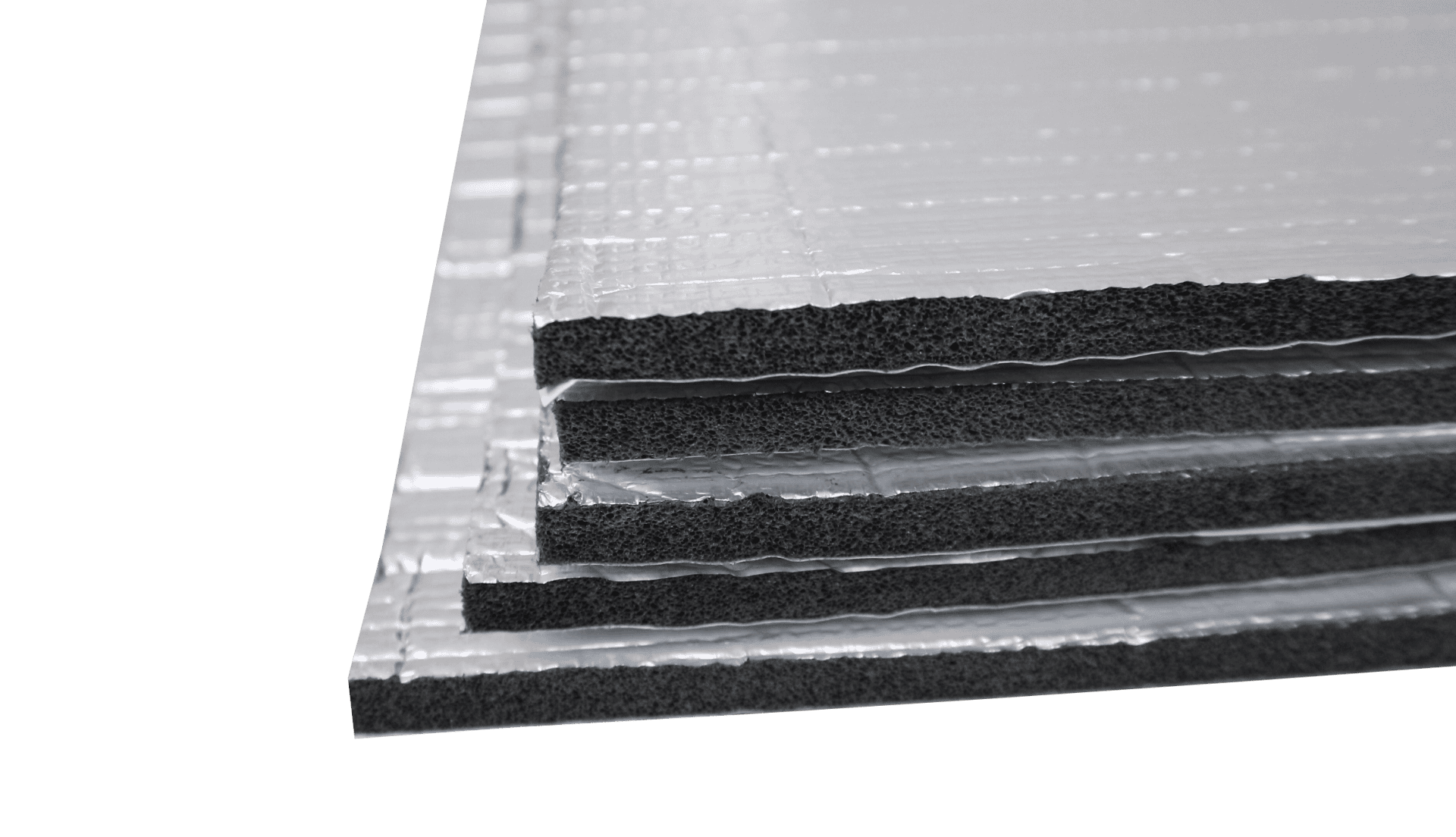
DSF – SOUND ABSORPTION comprises a range of Open Cell Polyurethane Foams, with a wide selection of surface finishes to meet various performance requirements, as detailed overleaf. They are designed to absorb noise over a wide range of frequencies.
DSF – SOUND ABSORPTION is available in sheets or rolls. Both can also be die-cut to size and shape.
DSF – SOUND ABSORPTION can be supplied with a pressure sensitive self-adhesive backing if required.
Product Code:
Product Code:
To obtain optimum bond strength from the self-adhesive backing supplied on DSF follow these instructions:
- Allow to stabilise at room temperature prior to use.
- Apply in the horizontal or vertical plane. Where there is a requirement for the damping sheet to be applied to the underside of a substrate, the substrate should be turned upside down if at all possible. The damping sheet can then be applied to the underside from the horizontal or vertical plane and left until the adhesive has fully cured before turning the substrate back to its correct position. If re-orientation of the
substrate is not possible, the damping sheet can be applied from the underside providing it is supported against the substrate until the adhesive cures. It is recommended that some form of permanent additional mechanical fixing also be used to retain DSF to the underside of substrates. This prevents the downwards pressure and weight of the damping sheet weakening the adhesive bond.
- Clean and dry the substrate with an appropriate cleaner i.e. methylated spirit or similar so that it is free from oil, grease, rust, dust or other particles. For applications onto timber substrates, the surfaces should
be prepared using a primary coat of A303 Adhesive, available from Onzca Industrial.
- If possible, gently preheat the damping sheet to 30°C and apply when the ambient temperature is between 18°C and 25°C. Do not subject to direct flame.
- Peel off the protective backing, position material onto substrate and apply a constant forward and downward pressure to the surface of the damping sheet to ensure it is securely fixed onto the substrate. A
hard timber or steel roller is recommended for this purpose.
- Particular care must be taken to avoid forming air pockets between the substrate and selfadhesive backing, as this will weaken the bond and reduce the vibration damping performance.
Tel:
Email: